
Rowing Shoes
Do Rowing Boat Shoes Improve Performance?

Mar
Introduction
In this blog, we will explore the importance of rowing shoes, their unique features, and how they contribute to the success and comfort of rowers.
The Basics of Rowing Shoes
Rowing shoes, are specialised footwear designed for rowers. Unlike traditional athletic shoes, rowing shoes are built to provide the rower with stability, support, and a direct connection to the boat, using a standard four hole system using small countersunk bolts which attach the shoes to a footplate , which in turn attaches to the foot stretcher in the boat . They come in various styles and materials used in their construction. There are various systems available, which allow the rapid change of shoes within a boat, which we will review separately.
Key Features
Thin Soles: Rowing shoes have extremely thin soles which don’t compress under load. This design reduces the distance between the rower’s feet and the foot stretcher, which is the adjustable plate where rowers place their feet. A minimal sole thickness and a hard material in the sole ensures a more efficient transfer of power from the rower’s legs to the oar.
Secure Fit: Rowing shoes are designed to have a snug and secure fit. They often have adjustable Velcro straps or “boa” laces to help rowers customize the fit for their comfort and performance. A secure fit prevents any unnecessary foot movement that could disrupt the rowing stroke and adversely affect the balance of the boat.
Lightweight: Rowing shoes are typically lightweight to minimize extra weight on the boat. This keeps the boat’s overall weight down to the accepted FISA minimum overall weight for each class of rowing boat and enhances its speed and manoeuvrability.
Ventilation: Many modern rowing shoes come with ventilation features and special materials and fabrics to keep the feet dry and comfortable during long rows. The design and materials used in their construction is particularly important, as wet feet can lead to discomfort and blisters.
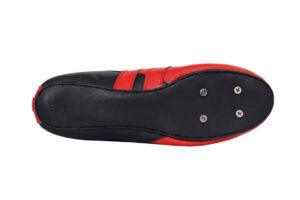
Compatibility: Rowing shoes are designed to be compatible with the boat’s foot stretchers and rigging systems. This ensures that rowers can easily adjust their foot positioning for optimal performance. The shoes connect to a removable footplate, which in turn attaches to the foot stretcher in the boat. Most rowing shoes use a standard four hole pattern originally used by Adidas who developed early rowing shoes but discontinued manufacture but the mounting hole pattern is now used by most rowing shoe manufacturers. This makes swapping or replacing rowing shoes relatively easy for the rower.
Unicorn Maximus rowing shoes and showing the standard hole fixing pattern in the image below
Why Rowing Shoes Matter
Rowing shoes might not be the most glamorous part of the rowing gear, but they play a crucial role in a rower’s success and comfort. Here are some reasons why rowing shoes matter:
Power Transfer: The thin soles and secure fit of rowing shoes help rowers transfer power directly from their legs to the oar, resulting in more efficient strokes. Unicorn shoes have a compacted material for the sole which is 3.5mm thick. The Bont shoes use carbon fibre in the sole and heel cup region of the shoe . This compares with running shoes which need to provide adequate cushioning. Most running shoes are made with approximately 10 mm of midsole material under the forefoot and 22mm on the heel. This would reduce power transfer in a rowing boat where the impact forces are less, since the rowing stroke uses a controlled leg extension drive connected to footplate via the shoes.
Stability: Rowing shoes provide a stable platform for rowers. This stability is vital in ensuring that rowers can maintain balance and execute precise movements. An extra wide fitting is important to allow the toes to be fully spread and generate the maximum power and boat control . Rowing shoes are optimised with a wider fit than cycling and running shoes .
Comfort: Long rows in training sessions can be gruelling, and comfort is paramount. Rowing shoes are designed to provide cushioning and support, reducing the risk of foot discomfort and blisters.
Safety: The heels of the rowing shoes must be attached by a safety heel restraint ensuring the safety of rowers, in the unlikely event of a capsize. The Velcro fastening must also be opened with a single pull on a cord connected to the Velcro straps on the shoe.
Hygiene : Athlete’s foot: According to the BUPA web site, this is a really common infection. Around seven in 10 people have athlete’s foot (tinea pedis) at some point in their lives. It’s caused by a fungus that grows in the skin between your toes and on the soles of your feet. It grows easily here because the area gets moist when your feet sweat. Athlete’s foot is more likely if your footwear makes your feet sweaty and you’re in a warm, humid environment. You can catch it by walking barefoot on damp, contaminated floors such as in communal changing or swimming areas. After scratching the affected area, you can spread the infection to other parts of your body. Therefore sharing shoes is very likely to increase the incidence of athletes foot within a club, particularly if the shoes aren’t allowed to fully dry if they become wet. Damp or wet shoes are usual in wet weather or periods of hot weather, when your feet sweat during exercise. It is therefore advisable to have personal rowing shoes, and make sure the materials are waterproof, breathable and can be removed from the boat to be fully dried between outings if necessary.
Construction Methods : The shoes should be hand stitched using double needle machines. This produces shoes which last much longer than single needle stitching. The shoes should use high quality microfiber material, which are breathable, water resistant, soft and very comfortable. If the shoes use hard materials they produce blisters particularly around the heel area and the top of the toes. Microfibre is better than a standard fabric, often used which doesn’t have the durability. Early Adidias rowing shoes were made from soft leather but cracked after becoming repeatedly wet in a rowing boat. Available materials are much better in the 2020s than the 1970s !
Personalisation: The adjustability of rowing shoes allows rowers to customize the fit to their individual preferences, ensuring a more comfortable experience. Having a pair of rowing shoes that are a good fit for the rower is essential for an enjoyable and optimal rowing outing or race. If you were a member of a Rugby or Football team would you expect to turn up to the club and use shared boots?
Are Specialised Rowing Shoes Worth It?
While rowing shoes might not be the most visible or celebrated aspect of the sport, having a good pair of rowing shoes which are comfortable and a good fit is undeniably essential. These specialised shoes are designed with precision to optimize a rower’s performance, ensuring power transfer, stability, comfort, hygiene and safety. They might not be the stars of the show, but they are undoubtedly the unsung heroes of smooth performance in the world of rowing. So, the next time you watch a rowing race or a rowing boat training on the river, remember that those rowers owe a significant part of their success and enjoyment to the often-overlooked rowing shoes on their feet.
Major brands in rowing shoes include Bont, who are better known for high quality cycling shoes for track and road racing cycling, Unicorn, which is a Global rowing shoe brand, used by boat manufacturers such as Sykes and some other boat manufacturers who have rowing shoes specifically made for their boats but which usually have the standard rowing four hole mounting pattern or can be retro fitted with shoes of a standard hole pattern to give rowers a choice of shoes. Bont and Shimano also known for cycling shoes make rowing shoes. The Shimano shoes seem to be more widely used in the USA than Europe and use their own Quick release system.
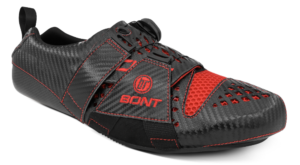
Bont BR1 Black red version with Boa tightening strap adjustment, carbon fibre articulating sole and carbon fibre heel cup for excellent support, power transfer and stability.
Can I Easily Change Rowing Shoes Myself ? : The task to change a pair of old rowing shoes should be straightforward. The first task is to remove the footplate from the boat by unscrewing the nut or wingnuts that secure it . Once the footplate has been removed this allows access to the four screw heads that attach each shoe to the footplate. Unscrew the four screws per shoe being careful with the cross head screw head. Line up the new shoes and tighten the screw heads by hand. Don’t use a power driver as this can strip the threads of the bolts or the heads of the screws . In some cases the holes in the footplate are slightly out of alignment . The accuracy of some manufacturers isnt to less than a mm tolerance. If this is an issue or if the old screws are damaged by corrosion it is easy to buy a new footplate . Be sure to know the number of rows of holes and the distances between the rows on the footplate. Footplates have one , two or three vertical rows of holes. Footplates for single sculls are narrower than for an eight .
Don’t forget to attach the heel restraint cord which should allow a maximum range of heel lift of 4-5cm and no more than the width of a credit card
Footboards and shoe plates for foot stretchers of rowboats | EuRow

An EU Row footplate with Unicorn Pegasus shoes to allow adjustable angle of shoe mounting
Other boat part supply firms also supply footplates in UK such as Neaves and ES Rowing services .
Check out our range of Rowing Shoes at Products – Rowing Shoes UK to see how they can improve the comfort of your rowing, your boat speed and give you a competitive edge.
